How to Explain Alternative Learning to Grandparents Without Getting Defensive

Learn how parents can handle extended family skepticism by moving from defensive theories to sharing concrete, visible proof of learning.

May 2026 · 10 min read

Link copied!
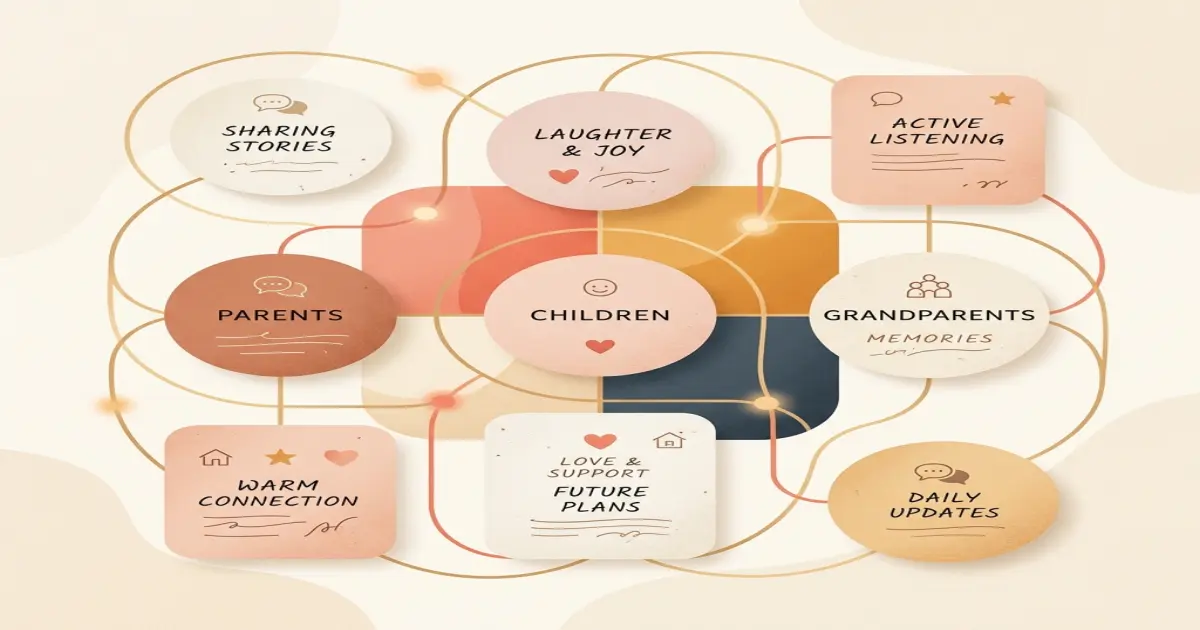
Abstract connecting lines and notes representing warm family conversations and shared understanding.

It is one of the most common moments in a home education journey.

You are at a family gathering or speaking on the phone. A grandparent asks a simple question: "What is she learning these days?" Or perhaps: "How is he doing with his math?"

The question sounds innocent, but to a parent who has stepped off the default track, it can feel like an interrogation. You feel your shoulders tighten. You prepare to defend your choice. You start explaining the flaws of the traditional school system, the value of self-directed play, or the research on child-led development.

Before you know it, a warm family conversation has turned into a debate about educational theory. The grandparent looks concerned and unconvinced. You feel isolated and defensive.

This tension is exhausting, but it does not have to be the default.

To build a better bridge with grandparents, parents first need to understand where the skepticism is coming from, why academic jargon fails, and how sharing real, visible proof of learning can change the whole conversation.

Why grandparents worry (and why it's okay)

It is easy to interpret a grandparent's skepticism as disapproval, lack of trust, or rigid thinking. Most of the time, however, it comes from a different place entirely: love and fear.

Grandparents care deeply about the child's future. They grew up in a world where the path was clear and narrow: you go to school, you get marks, you take exams, you get a degree, and you find a secure job. In that world, compliance and memorization were the safest ways to survive and succeed. For them, school was not just an institution; it was a protective shield.

When you pull your child out of that system, or even when you start prioritizing real-life rhythm over traditional homework, the grandparent sees the shield disappear. They worry:

  • Will the child be able to read and write?
  • Will they be able to get a job?
  • How will they make friends?
  • Are they falling behind?

Because they do not have a marksheet or a report card to look at, they have no way to verify that learning is happening. Their anxiety is real, and it is driven by care.

When you realize that their questions are actually expressions of love and concern, you can stop defending your educational choices. You do not need to prove that you are right. You only need to reassure them that the child is safe and growing.

The trap of academic jargon

When parents feel anxious, they often hide behind theory.

They use terms like "unschooling," "self-directed learning," "de-schooling," "child-led pedagogy," or "holistic education."

To a grandparent, these words can sound vague, experimental, or even irresponsible. When you say, "We don't use a curriculum; we follow her interests," they do not hear "creative freedom." They hear "no plan." When you say, "He learns math naturally through play," they do not hear "deep conceptual understanding." They hear "he is not doing math."

Theory divides. It forces people to choose sides. It makes grandparents feel that their own life experience—and the way they raised you—is being criticized.

Instead of trying to explain the theory of life-led learning, focus on the reality of what the child is doing. Drop the jargon and use plain language. Let the child's actual activity tell the story.

Shift from defending to showing

The most effective way to ease grandparent anxiety is to show, not tell.

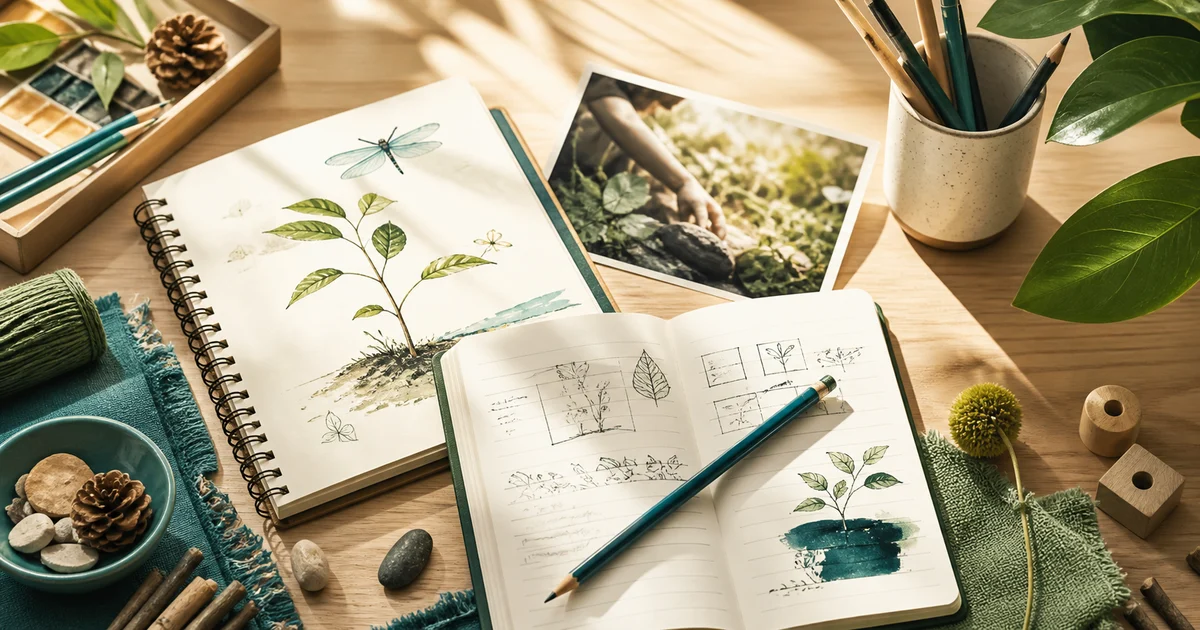
A grandparent who is told "she is learning biology through nature study" might remain skeptical. But a grandparent who is shown a sketchbook containing drawings of three different birds with notes about their beak shapes will understand immediately. The skepticism disappears because the evidence is solid.

When you shift from defending your choice to showcasing their growth, the dynamic changes. You are no longer an educational rebel defending a position; you are a proud parent sharing a moment of growth.

This is where a simple proof-of-learning system becomes invaluable. It gives you something concrete to share.

Three practical bridges

You do not need to send grandparents a massive portfolio or a formal report. Choose small, clear traces of learning that are easy to understand.

Here are three bridges that every family can use to share progress:

1. The Child's Question List

Keep a running list of questions your child asks during the week. When grandparents ask what the child is learning, share a few questions.

  • "She asked why the pressure cooker whistles after a certain time today."
  • "He wanted to know how the spin of a cricket ball changes when it hits wet grass."
  • "She asked why old houses in our town have thicker walls."

Questions are excellent proof of learning because they show attention and curiosity. They prove the child's mind is active. A grandparent can easily understand that a child who is asking these questions is not drifting—they are exploring.

2. The Project Showcase

When your child makes, builds, or repairs something, take a photo or video. Share it with a one-sentence description of the process.

  • "He built a cardboard model of a bridge today. It collapsed twice, but he corrected the support beam on the third try."
  • "She tried a new recipe for dinner and had to recalculate the ingredient measurements for four people."

A photo of a finished project is nice, but showing the progress—the mistake, the correction, and the final result—is much more powerful. It shows the grandparent that the child is learning how to solve problems in the real world.

3. The Practice Log

If your child is practicing a skill (like sport, music, drawing, or typing), share a simple trace of their effort over time.

  • "Here is a video of his bowling stance from last month compared to today. You can see how much more stable his front leg has become."
  • "She has been practicing sketching for ten minutes every morning. Here is her first sketch compared to today's."

A practice log shows consistency, discipline, and effort. These are values that grandparents respect deeply. When they see that alternative learning involves steady, focused practice, they feel reassured.

Real scripts for common concerns

Even when you share proof, grandparents may still ask direct, difficult questions. Here is how you can respond calmly and clearly without getting defensive.

What about socialization?

**The defensive response:** "School socialization is artificial and toxic anyway. My child meets real people in the real world." (This creates conflict and sounds defensive.)

**The reassuring bridge:** "We make sure she has plenty of time with other children. She goes to cricket practice three times a week, has a weekly art group, and we spend time with friends at the park. She is learning to interact with children of different ages and adults in a natural way."

This response focuses on the concrete activities and shows that you have a plan.

How will they get into college or get a job?

**The defensive response:** "Degrees don't matter anymore. The economy is changing and AI is replacing everything." (This sounds dismissive of their concerns.)

**The reassuring bridge:** "The path to college and work is much wider now. Many alternative education students build a portfolio of their projects, take specific exams when they are ready, or start practical apprenticeships. We are keeping those options open, but right now we are focusing on helping him build strong habits and deep skills."

This acknowledges their concern while keeping the focus on the child's current development.

Are you sure they are doing enough?

**The defensive response:** "Who decides what is enough? School is mostly busywork anyway." (This challenges their worldview.)

**The reassuring bridge:** "I understand it feels different without a daily school timetable. But we keep a steady weekly rhythm of practice, reading, project work, and reflection. Because we work one-on-one, she gets more focused learning in two hours than she would in a full day of classroom management."

This explains the efficiency of home learning without criticizing the school system.

The role of saved proof

Having a habit of saving proof is not just about reassurance for you—it is about sharing the journey.

When a grandparent receives a photo, a quote, or a short note about a child's project, they feel included. They are no longer looking at a closed box from the outside. They can see the path as it unfolds.

Over time, this shared proof changes how grandparents interact with the child. Instead of asking generic questions like "What grade are you in?" or "How are your studies?", they start asking about real things: "How is the bridge project coming along?" or "What did you discover about the pressure cooker?"

The conversation shifts from evaluation to connection.

Parent Prompt

This week, share just one piece of concrete proof—a photo of a project step, a child's question, or a short practice note—with a grandparent or relative. Do not explain the philosophy. Just share the growth.

Keeping the door open

You do not need to convert grandparents to your educational philosophy. They do not need to read the same books you read or agree with every choice you make.

They only need to see that your child is thriving.

Be patient with their worry. It is a sign that they care. By dropping the defensive arguments and sharing the real, living proof of your child's learning rhythm, you can help them move from anxiety to confidence.

And in doing so, you build a wider circle of support around your child's unique path.

Written by the Champ23 Team

Champ23 helps parents turn a child's real interests into practice, rhythm, and saved proof of learning. We write about learning from real life rather than conforming to a school-like curriculum.

Keep reading

Related articles