After the Paper Leak: Build What No Exam Can Take Away
Every paper leak makes the same point: a childhood shouldn't rest on one fragile gate. What families can build in a child that no leaked exam can touch.
May 2026 · 5 min read
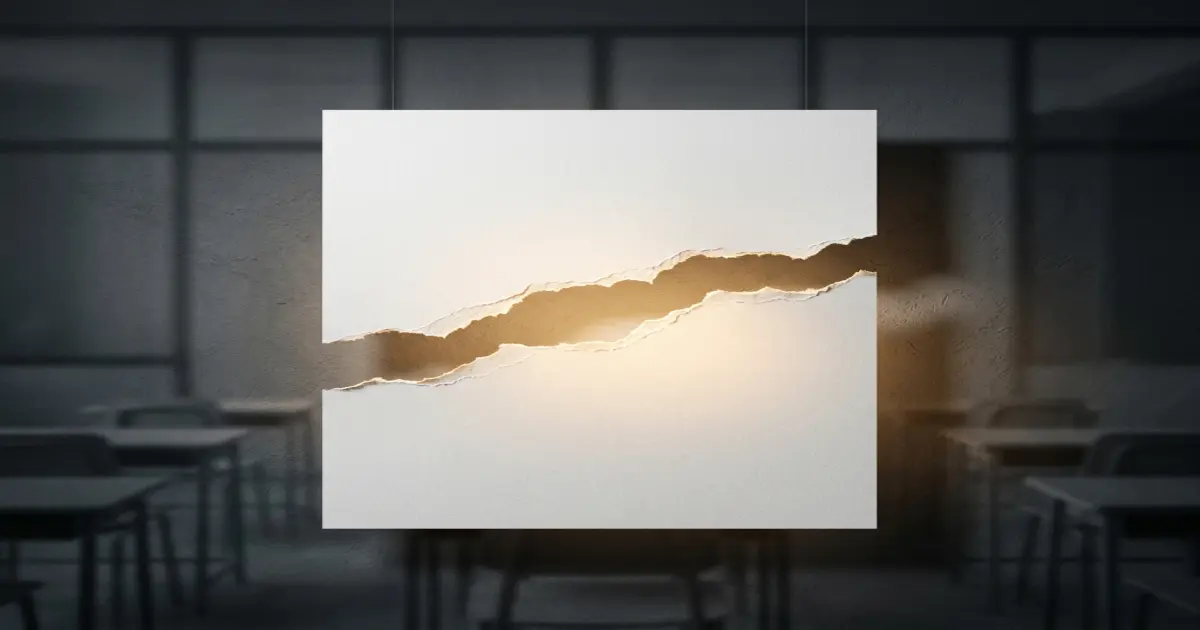
The news breaks the same way every time. A paper has leaked. An exam is cancelled, or worse, it isn't. Lakhs of students who gave up two years of their lives are told to wait, or re-appear, or trust that this time the process will hold.
Parents feel the anger first. The fear comes second, and it's the one that stays: we bet years of our child's life on a single gate, and the gate turns out to be made of paper.
Fix the security, yes. Demand fair exams, yes. But there's a question for the family that no exam agency can answer: what are we building in this child that no leak can touch?
What a narrow gate does to a wide child
Watch what a high-stakes exam does to a household. The child studies for the test — not the subject, the test. The parent becomes a score-watcher. The week reorganizes itself around coverage, revision, speed, and rank, and everything that doesn't feed the gate starts to look like a waste of time.
Then a paper leaks, a process fails, a result stalls in court — and the family discovers how much weight they'd stacked on one fragile point.
The conclusion isn't that children should never sit exams. Plenty will, and some routes genuinely require them. The conclusion is that an exam can be a gate a child walks through without being the ground the child stands on.
The portfolio no one can cancel
Here's what survives every leak, every cancellation, every delayed result: a child who reads with understanding, writes clearly, handles numbers with confidence, practices patiently, makes things, explains honestly, and starts again after mistakes.
None of that appears on a rank list, and none of it can be taken away by a stranger selling answer keys. A child with those skills who also needs to clear a formal exam simply prepares for it — from a base that's wider than the exam. A child with only the exam has everything riding on a gate they don't control.
Don't swap panic for drift
Some families see the fragility and swing hard the other way: no structure, no practice, no plan, freedom. That's not an answer either; it's the same fear pointing in the opposite direction, and it leaves the child just as unprepared.
The real response is undramatic. Keep the daily practice. Keep the reading. Let the child build and make things, save what they produce, talk about what changed. Keep formal exam requirements in view for when they're actually relevant — as one item on the list, not the list.
And if your family has been living inside exam pressure for a while, the first week of resetting can be almost embarrassingly simple: proper sleep, one book that has nothing to do with any syllabus, one core skill practiced calmly, one thing made or repaired, one page written about what was learned, one parent note saved. That's not a curriculum. It's a reminder that the child is more than the exam.
The sentence to say at home
Resist "exams are useless." It's too broad, probably wrong for your child's actual future, and it teaches contempt instead of judgment.
Something closer to this holds up better:
“Exams can matter, but they can't be the only thing we build. We'll prepare where we need to, and we'll keep building the skills that stay with you either way.”
A child who hears that isn't trapped between panic and rebellion. They can take the gate seriously without believing the gate is their worth.
The bet worth making
Every paper leak makes the same point with more force: a childhood shouldn't rest on one fragile gate.
Prepare for what's genuinely necessary. Build what can't be leaked. Of the two, only one is fully in your hands — which is exactly why it deserves most of your attention.
Written by the Champ23 Team
Champ23 helps parents teaching at home give children challenges worth doing, with enough structure to see the learning and keep going.